

Quick answer
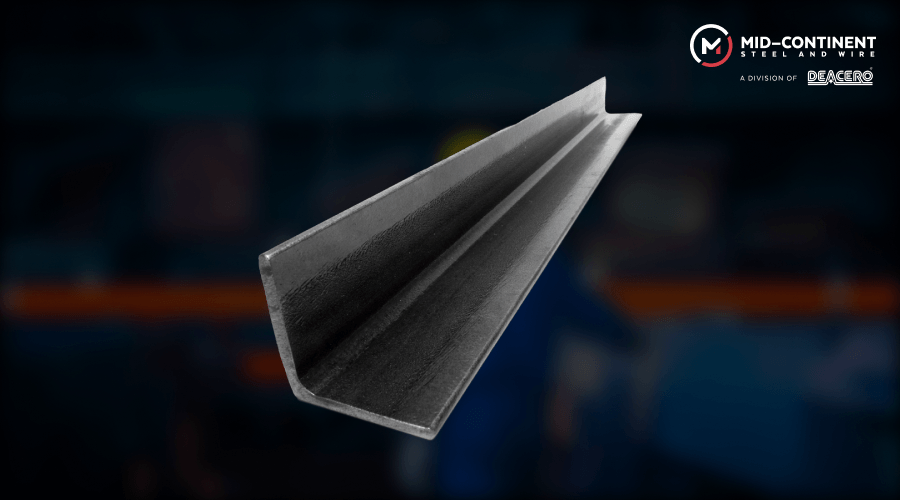
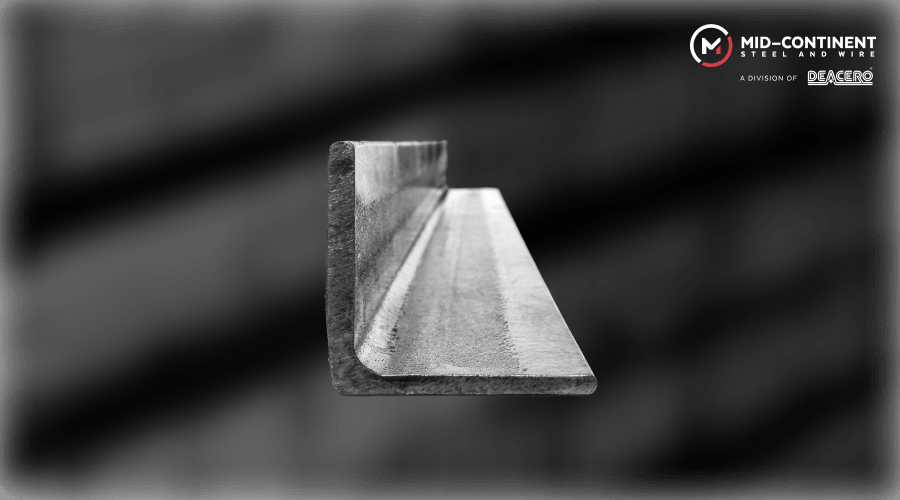
Angle iron is a length of hot-rolled or cold-formed structural steel with an L-shaped cross-section — two legs meeting at a 90-degree angle. In modern industry it is almost always carbon or alloy steel (not literally “iron”), most commonly produced to ASTM A36 for general structural use and governed by the dimensional and mechanical-property rules of ASTM A6/A6M. Engineers and steel mills refer to it as a steel angle, L-bar, or L-shape, and it is designated in shorthand as L (leg) × (leg) × (thickness) — for example, L 3 × 3 × ¼.
If you only need one takeaway, angle iron is the workhorse profile of structural steel — economical, weldable, drillable, and exceptionally efficient in bracing, framing, edging, and connection applications because its right-angle geometry resists bending in two directions simultaneously.
1. A precise technical definition
Dictionaries describe angle iron simply as “an iron or steel bar, brace, or cleat in the form of an angle” (Dictionary.com) or “a piece of structural steel rolled with an L-shaped section” (Merriam-Webster). For engineering purposes, that definition needs more rigor.
In modern structural practice, this L-shaped profile is:
- A prismatic structural member — uniform cross-section along its full length.
- L-shaped in section, with two flat legs joined at a 90° interior angle.
- Produced in two manufacturing routes: hot-rolled (the legs are formed at red-heat through rolling stands, leaving slightly rounded corners and a fillet at the interior heel) or cold-formed (a flat strip is press-braked or roll-formed at room temperature, giving sharper outside corners but lower yield reserves in the bend).
- Specified by three structural steel angle dimensions: leg A × leg B × thickness (t), with leg lengths often equal (e.g., L 2 × 2 × ¼) or unequal (e.g., L 4 × 3 × ⅜) (Alibre).
- Governed in North America by ASTM A6/A6M, the general-requirements standard that controls dimensional tolerances, straightness, mass per unit length, and marking for rolled structural shapes — including angles (ASTM International; AISC Steel Construction Manual).
Is angle iron actually iron?
No, not anymore. The name is a holdover from the wrought-iron era of the 19th century, when L-shaped sections were forged from puddled iron for bridges, ships, and early steel-framed buildings. Today, what we call the product is structural steel — an iron-carbon alloy with controlled additions of manganese, silicon, copper, and other elements, melted in basic-oxygen or electric-arc furnaces and refined per ASTM A6/A6M. The traditional name persists because it is so deeply rooted in trade vocabulary.
Other names you’ll see for the same product
- Steel angle (the preferred mill term)
- L-bar, L-angle, or L-shape (engineering shorthand)
- Angle bar (common internationally and in fabrication shops)
- Structural angle (when used as a load-bearing member)
2. How is it made?
Two manufacturing methods dominate, and the choice has real implications for strength, durability, weldability, and dimensional accuracy.
Hot-Rolling
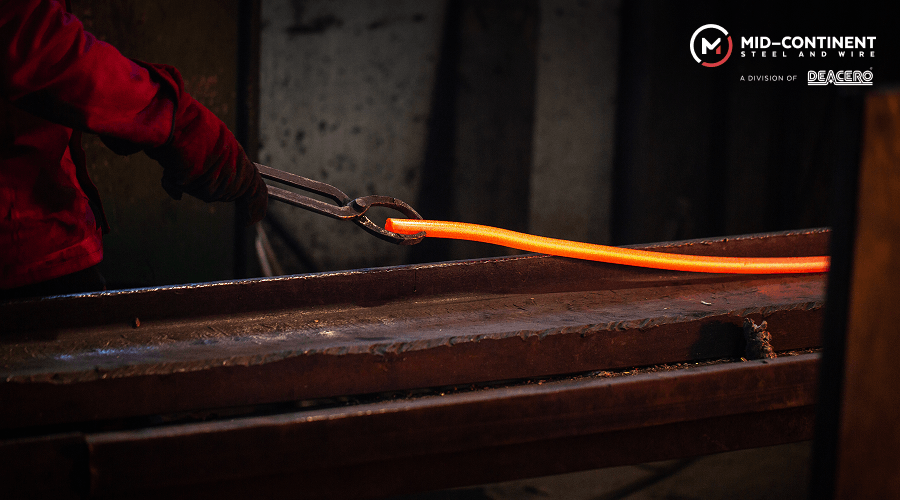
A billet is heated above its recrystallization temperature (typically 1,100–1,250 °C) and passed through a series of rolling stands that progressively form the L profile. Hot rolling produces:
- A filleted (rounded) interior heel that reduces stress concentration and improves fatigue life.
- Slightly rounded outside corners — mill geometry, not wear.
- Better weldability and ductility because the grain structure recrystallizes during forming.
- The standard route for structural-grade material such as ASTM A36 and ASTM A572 Grade 50.
Cold-forming
A flat strip is bent at ambient temperature on a press brake or roll-forming line. Cold forming produces:
- Sharper outside corners and tighter dimensional tolerances — preferred for architectural trim, brackets, and precision assemblies (Alibre).
- Increased yield strength in the bend region from work hardening, but reduced ductility there.
- A practical limit on thickness — most cold-formed angles are ¼″ and thinner.
Field tip: If you are designing a welded load-bearing connection, default to hot-rolled. If you need a crisp fit-up against a flat plate or a flush architectural reveal, cold-formed is the better tool.
3. Standard material specifications
Angle iron is supplied across a spectrum of grades. The right grade is driven by load demand, environment, weldability, and cost.
Common ASTM grades for angle steel
| Standard | Material type | Min. yield strength | Min. tensile strength | Typical application |
| ASTM A36 / A36M | Carbon structural steel | 36,000 psi (250 MPa) | 58,000–80,000 psi (400–550 MPa) | General framing, brackets, shelving, light structural work (Service Steel) |
| ASTM A529 Grade 50 | High-strength carbon-manganese | 50,000 psi (345 MPa) | 65,000–100,000 psi | Heavier framing where weight savings matter (Kloeckner Metals) |
| ASTM A572 Grade 50 | High-strength low-alloy (HSLA) columbium-vanadium | 50,000 psi (345 MPa) | 65,000 psi (450 MPa) | Bridges, transmission towers, heavy industrial frames (Steel Sections) |
| ASTM A588 | Weathering steel (HSLA, atmospheric corrosion-resistant) | 50,000 psi (345 MPa) | 70,000 psi (485 MPa) | Exposed structures without paint (ASTM A6/A6M) |
| ASTM A240 Type 304 / 316 | Stainless steel | 30,000 psi (205 MPa) | 75,000 psi (515 MPa) | Food processing, marine, chemical, architectural (Penn Stainless) |
ASTM A36 remains the default specification for the vast majority of angle iron sold in the United States. When evaluating ASTM A36 yield strength vs tensile strength the “A” denotes a ferrous alloy and the “36” denotes the 36,000 psi minimum yield strength — the threshold at which the steel begins to deform permanently under tension.
Coatings and corrosion protection
For outdoor, coastal, or humid service, the underlying steel is typically protected by hot-dip galvanizing per ASTM A123/A123M to guarantee long-term durability. The standard specifies minimum zinc coating thickness, finish, and adherence — not a maximum — and the coating itself contributes nothing to mechanical strength; that comes entirely from the base steel grade. Other common finishes include shop primer paint, powder coating, and (rarely, for premium applications) zinc-nickel or duplex coatings.
Mechanical properties at a glance — A36
- Yield strength: ~36,000 psi (250 MPa)
- Tensile strength: 58,000–80,000 psi (400–550 MPa)
- Elongation in 8 in.: 20% minimum
- Density: 490 lb/ft³ (7.85 g/cm³)
- Modulus of elasticity: 29,000,000 psi (200 GPa)
Source: ASTM A36 datasheets and ASTM A6/A6M.
4. Sizing conventions and standard dimensions
How to read an angle iron designation
The industry shorthand is universally understood:
L 3 × 2 × ¼ A36
│ │ │ │ │
│ │ │ │ └── Material grade (ASTM A36)
│ │ │ └──────── Thickness of each leg (¼ in.)
│ │ └──────────── Short leg length (2 in.)
│ └──────────────── Long leg length (3 in.)
└─────────────────── Shape designation: L for angle
When both legs are equal, only one leg length is listed (e.g., L 2 × 2 × ¼). When they differ, the longer leg is listed first in U.S. practice.
Equal-leg vs. unequal-leg angles
| Type | Geometry | Structural behavior | Typical use |
| Equal-leg(e.g., L 2 × 2 × ¼) | Symmetric L | Even moment of inertia about both principal axes; balanced load distribution | Frames, shelves, racks, edge protection, welded fabrications |
| Unequal-leg(e.g., L 4 × 3 × ⅜) | Asymmetric L | Higher moment of inertia about the axis parallel to the longer leg — directional stiffness | Trusses, lintels, beam seats, reinforcements where loads are not symmetric |
For an unequal-leg angle, orienting the longer leg in the direction of the bending force maximizes stiffness — a small detail that often separates a passing connection design from a failing one (Alibre).
Standard angle iron sizes (ASTM A36, hot-rolled)
The table below covers the most commonly stocked sizes. Mill production runs are governed by ASTM A6/A6M Section 12, and the full AISC L-shape series is published in the Steel Construction Manual.
Equal-leg angles
| Size (in.) | Thickness (in.) | Weight (lb/ft) |
| 1 × 1 | 1/8 | 0.80 |
| 1¼ × 1¼ | 3/16 | 1.41 |
| 1½ × 1½ | 3/16 | 1.79 |
| 2 × 2 | 1/8 – 3/8 | 1.65 – 4.70 |
| 2½ × 2½ | 1/4 | 3.70 |
| 3 × 3 | 1/4 – 1/2 | 4.90 – 9.40 |
| 4 × 4 | 1/4 – 1/2 | 6.60 – 12.80 |
| 6 × 6 | 3/8 – 1/2 | 14.90 – 19.60 |
| 8 × 8 | 1/2 – 1 | 26.40 – 51.00 |
Unequal-leg angles (sample)
| Size (in.) | Thickness (in.) | Weight (lb/ft) |
| L 3 × 2 × ¼ | 1/4 | 4.10 |
| L 4 × 3 × ⅜ | 3/8 | 8.50 |
| L 4 × 3 × ½ | 1/2 | 11.10 |
| L 6 × 4 × ⅜ | 3/8 | 12.30 |
| L 8 × 6 × ½ | 1/2 | 23.00 |
Weights are nominal; consult mill certifications for exact mass. Tables compiled from structural steel catalogs by DEACERO—the parent company and manufacturing force backing Mid-Continent Steel & Wire’s North American distribution—and industrial standard size references.
Weight calculation
If you need a quick estimate before pulling spec sheets, a reliable approximation for steel angle weight per foot is:
[ W \approx 0.00785 \times (L_1 + L_2 – t) \times t ]
where (L_1) and (L_2) are leg lengths and (t) is thickness, all in millimeters, returning kg/m. For U.S. customary units the underlying density is 490 lb/ft³ (Alibre).
Standard stock lengths and tolerances
- Stock lengths: 20 ft and 40 ft are standard in the U.S. market; 6 m and 12 m in metric markets. Custom cut-to-size is widely available from service centers.
- Dimensional tolerance (per ASTM A6): leg length ±1/32″ to ±1/16″ depending on size; thickness ±0.01″ to ±0.03″.
- Straightness: deviation should not exceed 0.4% of total length.
- Angle (squareness): ±1° from 90°.
Always cross-reference a supplier’s mill test report (MTR) against these tolerances before incorporating steel angle iron into a critical connection.
5. Industrial and structural applications
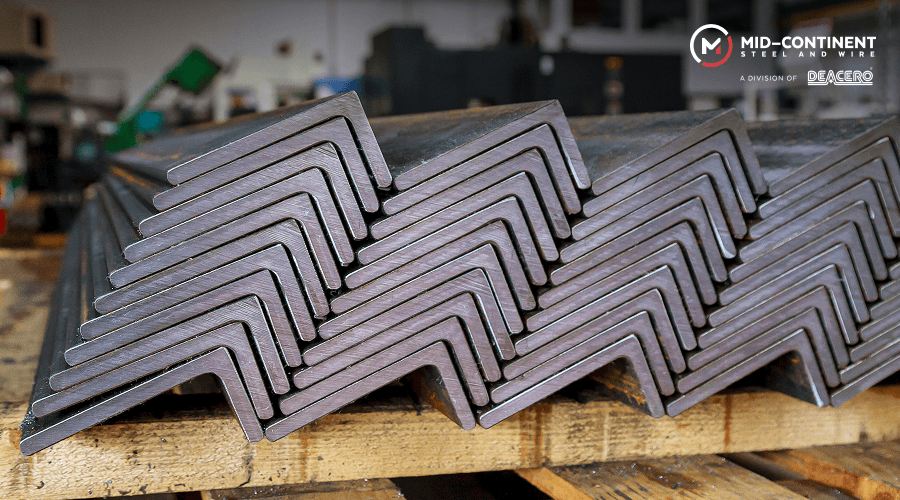
Angle iron’s versatility comes from a simple geometric truth: bending material into an L dramatically increases its moment of inertia relative to a flat bar of the same mass. That means more stiffness per pound, one of the main benefits why this profile is the baseline for so many heavy-duty carbon steel L-bar applications across nearly every steel-using industry.
Building and infrastructure construction
- Lintels above masonry openings (doors, windows) — typically L 3½ × 3½ × ¼ or larger, sized to the span and brick course above.
- Bracing and lateral stability members in light-frame and pre-engineered metal buildings.
- Stair stringers, landing supports, and handrails.
- Edge protection at slab edges, loading docks, a block wall and curb angles in concrete construction.
- Built-up sections — pairs of angles bolted or welded back-to-back (the classic “double angle” or “starred angle”) form efficient tension members in trusses and transmission towers (AISC Steel Construction Manual).
Industrial fabrication and equipment
- Machine frames and bases — equipment skids, conveyor frames, hopper supports.
- Shelving and pallet racking — light-gauge for static storage, heavier hot-rolled for industrial racking.
- Trailer and chassis components, gussets, and reinforcing brackets.
- Guarding and platforms — toe-boards, ladder rails, walkway supports.
Power, transmission, and telecommunications
- Lattice towers for high-voltage transmission lines and cellular communications are built almost entirely from bolted angle iron — a structural form that has been refined since the late 19th century.
Repair, retrofit, and DIY
- Corner reinforcement for wooden beams, workbenches, and equipment crates used in everyday diy projects.
- Custom welded frames for garden gates, BBQ pits, smokers, and trailers.
- Sister members added to existing joists or rafters to increase load capacity.
Why use a steel angle iron over a square tube, channel, or flat bar? An L-shape provides bidirectional stiffness, exposes both faces for welding or bolting. When compared to other forms of structural profiles, it is much easier to fit around existing structures — you can clamp it onto a corner, have holes drilled through one leg, and load the other in pure shear or bearing. For a deeper comparison of angle vs. tube, see McHone Industries’ strength comparison.
6. Selecting the right product for your project
The right specification is a four-variable optimization: load, environment, fabrication method, and cost.
Step 1 — Define the load
Estimate the maximum service load and identify whether it is axial (tension/compression), bending, or combined. For bending and column applications, calculate the required section modulus (S) and moment of inertia (I) and match them against published AISC L-shape values. For tension-only members (bracing), gross and net cross-sectional areas drive the design.
Rule of thumb (not a substitute for engineering): for light residential framing or workbench loads, ¼″ thickness in a 2–3″ leg is generally sufficient; for industrial frames carrying machinery, step up to ⅜″ or ½″ in 3–4″ legs; for lintels and structural lintels, follow span tables published by your local building authority.
Step 2 — Match the grade to the duty
- General-purpose, welded, indoor: ASTM A36 to secure great strength.
- Heavier loads where weight savings matter: ASTM A572 Grade 50 or A529 Grade 50.
- Exposed structures, unpainted: ASTM A588 weathering steel.
- Marine, food-grade, or sanitary: 304/304L (mild corrosion) or 316/316L stainless (chloride/marine exposure) (Penn Stainless).
Step 3 — Choose the coating
- Indoor, dry: mill scale or shop primer is acceptable.
- Outdoor, humid, coastal: hot-dip galvanizing per ASTM A123.
- Architectural exposure: powder coat over galvanized (duplex system) for color plus corrosion resistance.
Step 4 — Equal or unequal leg, orientation, and connection method
- For symmetric loads and bolt patterns: equal-leg.
- For directional bending or where one face must bear on another structure: unequal-leg with the long leg aligned to the load direction.
- For welded connections: hot-rolled with its filleted heel reduces weld cracking risk.
- For bolted connections: confirm edge distance and gauge lines per AISC limits before drilling.
Why is this steel profile sometimes “expensive”?
Three structural factors drive the price of steel angle:
- Raw material cost — hot-rolled coil and billet pricing tracks global steel markets and scrap indexes.
- Section weight — the material is sold by the pound, so an 8 × 8 × 1 section can cost 30–60× a 1 × 1 × ⅛ on a per-foot basis.
- Grade and finish premiums — A572, weathering steel, stainless, and galvanized all add cost over plain A36. Stainless angle in particular is multiples more expensive than carbon steel because of the alloying content (chromium, nickel, molybdenum).
Custom cut-to-size, drilling, and miter-cutting add fabrication fees that can equal or exceed the material cost for small orders — bundling parts and ordering full stock lengths is often the cheapest path.
7. Safety and handling considerations
Angle iron is comparatively safe to work with, but the same edges and corners that make it useful structurally also make it a laceration and pinch-point hazard. A short list of best practices, drawn from OSHA’s steel-erection rules (29 CFR 1926 Subpart R) and standard fabrication-shop safety guidance.
Personal protective equipment (PPE)
When cutting, grinding, drilling, welding, or handling raw steel angle, use at minimum (Steel Supply LP PPE guide):
- Cut-resistant gloves (ANSI A4 or higher) — mill-edge angle iron is sharper than most fabricators expect, especially on cold-formed sections.
- Safety glasses with side shields, plus a face shield during grinding or wire-wheeling.
- Steel-toed footwear rated to ASTM F2413.
- Hearing protection during cutting (chop saws, plasma, oxy-fuel) and grinding.
- Welding helmet with auto-darkening lens (DIN 10–13 depending on amperage), flame-resistant jacket, and welding gloves for hot work.
- A respirator when grinding galvanized material — zinc oxide fumes from cutting or welding galvanized steel can cause “metal fume fever.” Always grind off the zinc layer in the weld zone before striking an arc.
Material handling
- Lift with the strong axis vertical — long stock can buckle laterally if hoisted flat.
- Use rigging chokers or nylon slings, not bare chains, on coated or painted angles to avoid damaging the coating.
- Bundle and band stock for transport; loose angle iron in a truck bed is a projectile during sudden stops.
- Watch pinch points when sliding angles off a rack — the L-shape can grab fingers between flanges.
Sharp-edge and storage hygiene
Per industry sharp-edge safety guidance (HSE Nation):
- Deburr cut ends immediately — a quick pass with a flap disc removes the saw burr that causes the worst lacerations.
- Cap or shield exposed ends in walk-by storage areas.
- Store horizontally on racks rated for the bundle weight; never lean long stock vertically against walls where it can fall.
Fabrication-specific hazards
- Cutting: chop saws and abrasive wheels throw hot sparks 10+ feet — clear the area of flammables (cardboard, oily rags, gas cylinders).
- Welding: ensure adequate ventilation. Mig welding A36 produces relatively low fume rates, but enclosed shops still need extraction.
- Drilling: clamp the workpiece — never freehand drill an angle iron. Magnetic drills are the professional standard for large holes.
- Galvanized stock: as noted, grind off zinc in the weld area and provide local exhaust ventilation. Hot-dip recoat (cold galvanizing paint) afterward to restore corrosion protection.
OSHA’s broader steel-erection scope under 29 CFR 1926.750 applies any time angle iron is being installed as a structural element in commercial construction — fall protection, connector qualifications, and pre-erection planning all kick in once you leave the shop floor.
8. Quality acceptance and supplier checks
Before angle iron enters a critical assembly, verify the following — these are the same checks our quality team runs at MCSW on every inbound mill load:
- Mill test report (MTR) — confirm grade (e.g., A36), heat number, chemical composition, and tensile/yield test values.
- Dimensional inspection — caliper the leg lengths and thickness at multiple points; confirm against ASTM A6 tolerances.
- Straightness — sight along the length or measure deviation with a string line; reject sections beyond 0.4% of length.
- Surface condition — rust bloom is acceptable on uncoated A36; pitting, laminations, or seams are not.
- Galvanizing inspection (if applicable) — verify coating thickness with a magnetic gauge per ASTM A123; look for bare spots, blisters, and gross dross.
- Marking — every bundle should carry a tag with ASTM designation, grade, heat number, size, and producer mark per ASTM A6.
A reputable steel supplier will produce these records on request without delay. If they cannot, source elsewhere.
Frequently asked questions
What are angle irons used for?
Angle iron is used wherever a rigid right-angle structural element is needed: framing, bracing, trusses, lintels, brackets, machine frames, shelving, lattice towers, corner protection, and welded fabrications of every kind. Its L-shape provides high stiffness-to-weight efficiency in two directions simultaneously, which is why it remains one of the most widely used structural-steel profiles in the world.
What is another name for angle iron?
The most common alternative names are steel angle, L-bar, L-angle, L-shape, angle bar, and structural angle. Engineers and mill catalogs prefer “L-shape” or “steel angle”; trades and fabricators tend to say “angle iron.”
Is angle iron actually steel?
Yes — virtually all angle iron sold today is steel, not iron. The most common grade is ASTM A36 carbon structural steel. The “iron” in the name is a holdover from the wrought-iron era when L-shaped sections were forged from puddled iron before modern steelmaking displaced it.
Why is angle iron so expensive?
Three drivers: raw steel-market pricing (volatile and globally indexed), section weight (angle iron is sold by the pound and heavier sections scale fast), and grade or coating premiums (A572, weathering steel, galvanizing, and stainless all add cost over plain A36). Custom cutting, drilling, and small-order quantities add fabrication fees that often exceed the material cost.
What is the strongest angle iron?
Among commonly available grades, ASTM A572 Grade 50 and ASTM A529 Grade 50 offer the highest yield strengths (50,000 psi) in standard hot-rolled L-shapes. For specialty service, quenched-and-tempered grades under ASTM A913 reach higher still, and certain proprietary alloy angles exceed 65,000 psi yield. Strength, however, must be matched to weldability, ductility, and cost — A36 remains the best all-around choice for most projects.
How long is a standard length of angle iron?
In the U.S. market, 20 ft and 40 ft are the most common stock lengths from primary mills and service centers; in metric markets, 6 m and 12 m. Most suppliers offer cut-to-size for a small fee, providing an affordable way to get exactly what your job site requires.
How do I know what size angle iron I need?
Start with the load (axial vs. bending), the unbraced length, and the required deflection. Compare your demand to the published section properties — area (A), moment of inertia (Ix, Iy), and section modulus (Sx, Sy) — in the AISC Steel Construction Manual L-shape tables. For non-engineered applications (shelving, brackets, light framing), match the angle thickness to the load class: 1/8″ for light decorative, 3/16″–1/4″ for medium-duty supports, 3/8″–1/2″ for heavy framing.
Final takeaways
Angle iron is a deceptively simple product whose engineering value sits at the intersection of geometry, metallurgy, and a century of mill standardization. The L profile multiplies stiffness; the ASTM A36 baseline guarantees predictable strength and weldability; and the dimensional discipline of ASTM A6/A6M ensures every piece you buy fits the next one. This overview serves as a comprehensive guide to selecting an L-shape that is highly capable of handling everyday fabrication, maintenance, and setup demands.
Whether you are designing a bridge gusset, fabricating a custom trailer, or reinforcing a workbench, choosing the right size, grade, and coating up front is the difference between a structure that performs for decades and one that needs rework in a year.
At Mid-Continent Steel and Wire, we maintain a robust inventory across the full range of standard A36 structural angles, high-strength A572 grades, and galvanized stock cut to order, providing certified mill test reports with every shipment. Backed by the world-class manufacturing power of DEACERO—producers of some of the most sustainable structural steel in North America—our specialized technical team is ready to help you size, specify, and source the exact steel profiles required for your commercial projects, from quick custom-cut jobs to high-volume industrial infrastructure supply.
Contact our structural steel team →
Sources and further reading
- ASTM International. A6/A6M — Standard Specification for General Requirements for Rolled Structural Steel Bars, Plates, Shapes, and Sheet Piling.
- American Institute of Steel Construction. Steel Construction Manual — L-shape section property tables and dimensional tolerances.
- Service Steel. What is A36 Steel? Composition, Properties, and Uses.
- American Galvanizers Association. Overview of ASTM A123/A123M.
- Kloeckner Metals. A529-50 Beams, Angles, and Channels.
- Steel Sections. ASTM A572 Steel Angle — HSLA Steel for High Strength.
- Penn Stainless. Unequal Leg Angles, 304/304L and 316/316L.
- Alibre. Angle Iron Specs: Complete Guide to Steel Angle Dimensions, Sizes, and Weight Chart.
- Sugar Steel. Structural Angles size and weight reference.
- Occupational Safety and Health Administration. 29 CFR 1926 Subpart R — Steel Erection and 1926.750 Scope.
- Steel Supply LP. Personal Protective Equipment (PPE) for Safely Working with Steel.
- HSE Nation. Sharp Edge Safety.
- DEACERO Ángulos Estructurales