
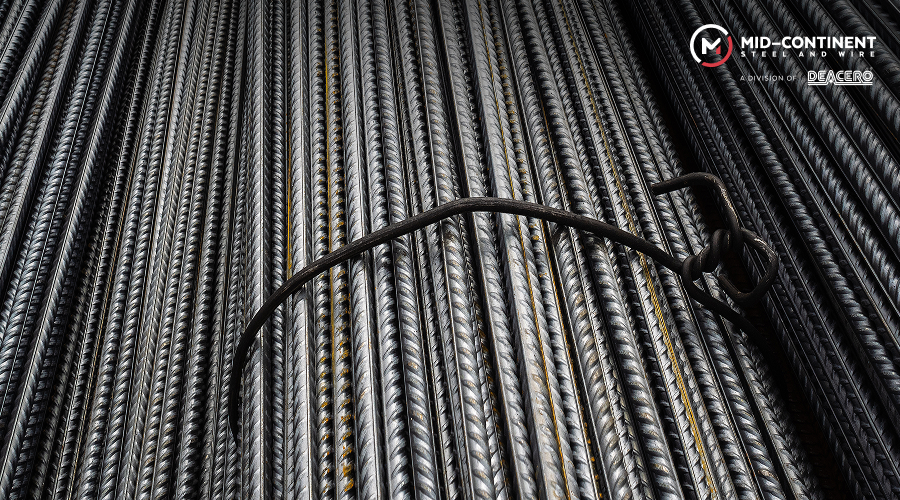

Planning a concrete project—whether residential, commercial, or infrastructure-related—requires selecting the appropriate reinforcement materials. Rebar size and grade play an important role in the strength, durability, and long-term performance of reinforced concrete structures.
This comprehensive guide breaks down everything you need to master about rebar sizes, including standard dimensions, sizing systems, and how to achieve optimal selection for your project. Keep reading to discover the insights—from tensile strength to yield strength—that will transform your concrete reinforcement approach and ensure your reinforced concrete meets all building codes and load requirements.
What are rebar sizes?
Steel rebar (short for reinforcing bar) is used to strengthen concrete by improving its ability to handle tensile loads. Since concrete excels in compression but fails dramatically in tension, rebar delivers the essential tensile strength that prevents catastrophic cracking and structural collapse.
Rebar sizes directly determine the diameter of the steel bar, which fundamentally controls its load-bearing capacity and overall stability.. The larger the diameter, the more robust the reinforcement becomes—it’s that straightforward.
How rebar sizes are measured
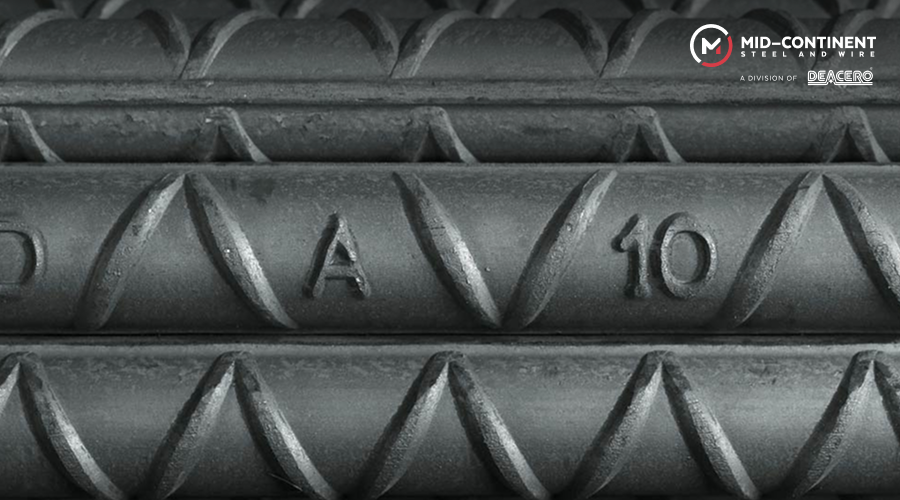
In the United States, rebar sizes are commonly identified using a numbering system based on eighths of an inch.
- A #3 rebar = 3/8 inch diameter
- A #4 rebar = 4/8 inch (1/2 inch) diameter
- A #5 rebar = 5/8 inch diameter
This system provides a simple and standardized way to identify bar diameters.
In contrast, metric sizing (utilized throughout many international markets) measures rebar in millimeters, such as 10 mm, 12 mm, or 16 mm—providing global standardization.
Standard Rebar Sizes and Their Dimensions
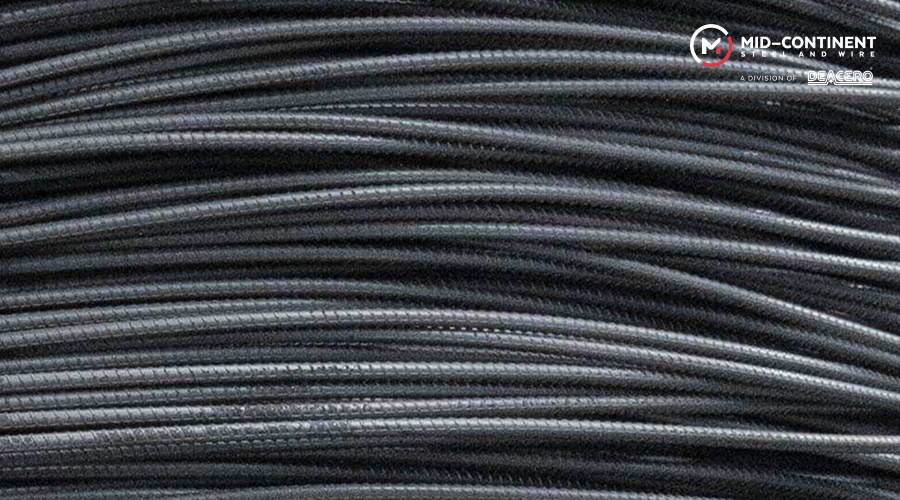
Here’s your essential reference for the most frequently deployed rebar sizes:
| Rebar Size | Diameter (inches) | Diameter (mm) | Common Uses |
| #3 | 3/8″ | 9.5 mm | Light residential work, patios, driveways |
| #4 | 1/2″ | 12.7 mm | Foundations, slabs, sidewalks |
| #5 | 5/8″ | 15.9 mm | Walls, footings, load-bearing slabs |
| #6 | 3/4″ | 19.1 mm | Heavy-duty foundations, columns |
| #7 | 7/8″ | 22.2 mm | Bridges, commercial construction |
| #8 | 1″ | 25.4 mm | High-load structures |
| #9+ | 1.128″+ | 28.7 mm+ | Industrial and infrastructure projects |
Critical insight: The most commonly used sizes in residential construction are #3, #4, and #5 due to their versatility across slabs, sidewalks, patios, and foundations.
Rebar grades and strength
Beyond size, rebar classification includes grade, which indicates its yield strength—essentially the maximum amount stress it can withstand before permanent deformation occurs.
Critical grades include:
- Grade 40 – Lower strength applications with exceptional workability
- Grade 60 – Commonly used in residential, commercial, and infrastructure construction projects.
- Grade 75+ – High-strength applications demanding superior performance
Why this matters: Larger size doesn’t automatically mean greater strength. Sometimes higher grade rebar achieves identical strength with significantly smaller diameter—optimizing both cost and service life.
Choosing the right rebar size
Selecting the appropriate rebar size depends on several factors that affect project performance. Here’s how to approach it systematically:
1. Type of project
Different structures require different reinforcement specifications depending on load and design requirements.
- Residential slabs → typically #3 or #4
- Foundations → #4 or #5
- Structural columns → #5 to #8
2. Load requirements
Heavier structural loads generally require larger bar diameters or higher-strength grades. You must consider the minimum yield strength required to support the weight.
- Light loads → smaller nominal bar diameters deliver adequate load capacity.
- Heavy loads → larger diameters and higher-strength grades may be required for heavy-load applications.
3. Spacing and layout
Sometimes engineers strategically deploy smaller rebar spaced closer together instead of fewer large bars to distribute stress more effectively across the entire structure.
4. Local building codes
Always adhere to local regulations and engineering specifications, as they establish the structural requirements that ensure safety and compliance.
Metric vs. imperial rebar different sizes
If you engage in international projects, you’ll encounter both systems requiring seamless conversion.
You can refer to a rebar size chart to navigate between imperial bar sizes and soft metric equivalents. Whether you’re working with standard Carbon Steel Rebar or high-performance options like epoxy-coated rebar and stainless steel rebar, understanding the unit length and weight is key to making informed decisions for your project
| Imperial Size | Metric Equivalent |
| #3 | 10 mm |
| #4 | 12 mm |
| #5 | 16 mm |
| #6 | 20 mm |
| #8 | 25 mm |
Essential tip: Metric sizes represent approximate conversions, not exact matches—always verify specifications.
Common mistakes when selecting rebar sizes
Avoid these frequent errors that compromise structural integrity:
- Using undersized rebar: Selecting a bar size with insufficient nominal diameter can lead to devastating cracking or complete structural failure.
- Overengineering: Using unnecessarily large rebar sizes can increase material costs without providing additional structural benefits.
- Ignoring spacing requirements: Proper spacing proves as crucial as size selection to ensure the concrete and steel bond correctly.
- Not considering grade: A bar’s tensile strength and yield strength encompass far more than diameter alone; always verify the rebar grade.
Understanding rebar sizes and grades helps ensure reinforced concrete structures meet project performance and code requirements. From modest residential slabs to large-scale infrastructure like bridges, the optimal combination of size, grade, and protection—such as epoxy coated or galvanized rebar to prevent corrosion—ensures superior performance.
When uncertainty arises, consult a structural engineer or follow local building codes to guarantee compliance. Investing effort in selecting the most suitable rebar pays dividends in long-term safety and cost efficiency for every stakeholder involved.