
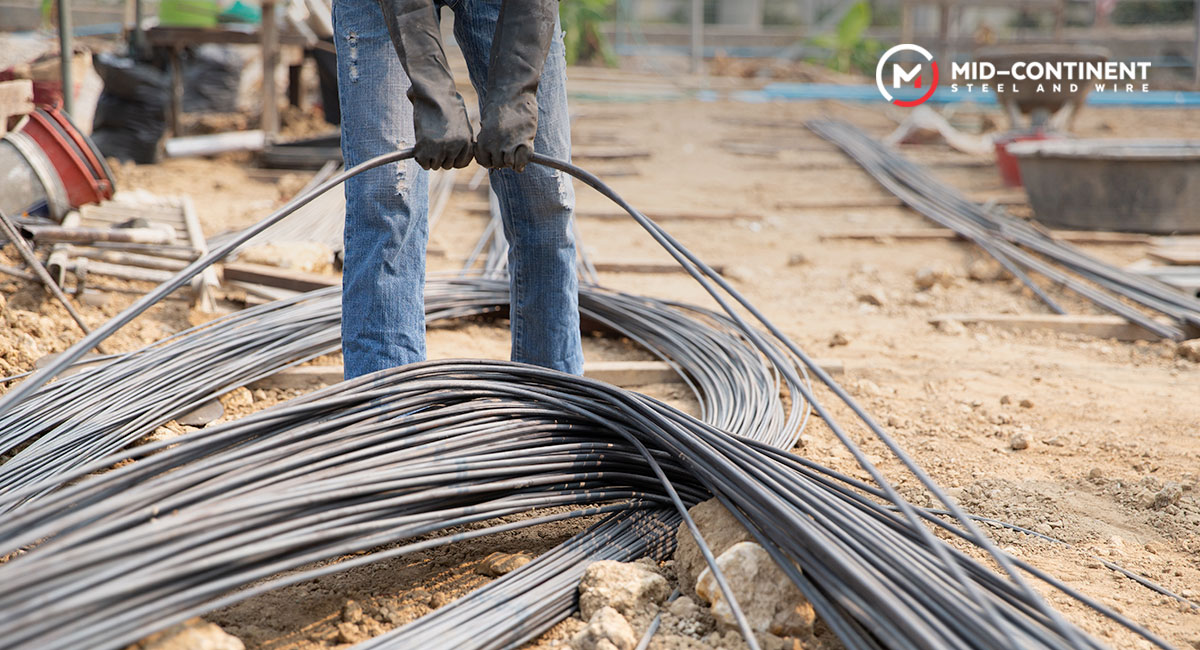

Rebar plays a crucial role in forming robust and long-lasting reinforced concrete structures. It comes in multiple forms, designed for specific uses. Two of the most commonly used options are steel rebar and fiberglass rebar, which fulfill different roles depending on the application. Let’s take a closer look at their key differences.
Steel rebar: the foundation of reinforcement
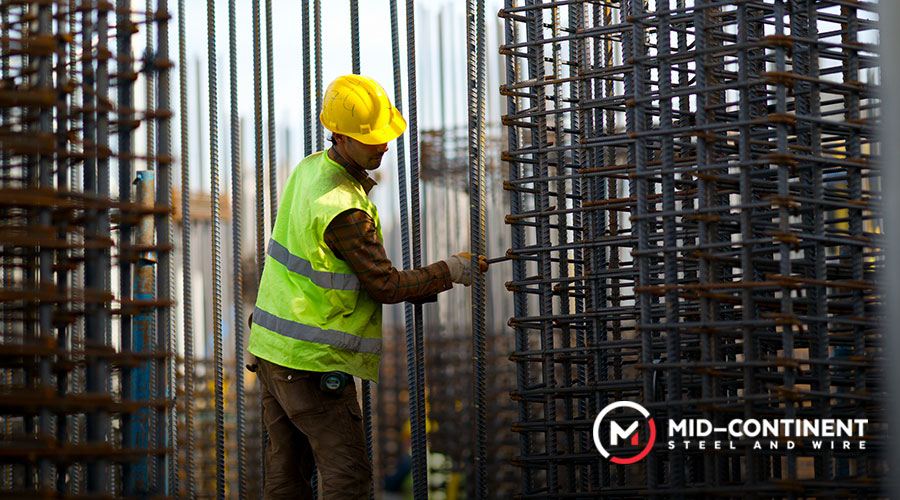
Steel rebar is a metallic alloy primarily composed of carbon steel, with small quantities of additional elements like manganese and silicon. This composition gives steel rebar its high tensile strength and dependable performance. It is manufactured in various shapes and profiles.
Some of the main characteristics of steel rebar are:
- High tensile strength: Provides excellent resistance to pulling forces, helping concrete handle tension stresses.
- Durability: Performs well under heavy loads and long-term structural demands.
- Strong bonding with concrete: Ribbed or deformed surfaces improve grip and load transfer within concrete.
- Ductility: Can bend without breaking, allowing structures to absorb stress and seismic forces.
- Thermal compatibility: Has a similar thermal expansion rate to concrete, reducing cracking from temperature changes.
- Availability and versatility: Widely available in various sizes, grades, and shapes for different construction needs.
- Cost-effectiveness: Generally affordable and well-established in the construction industry.
Fiberglass rebar: the revolutionary alternative
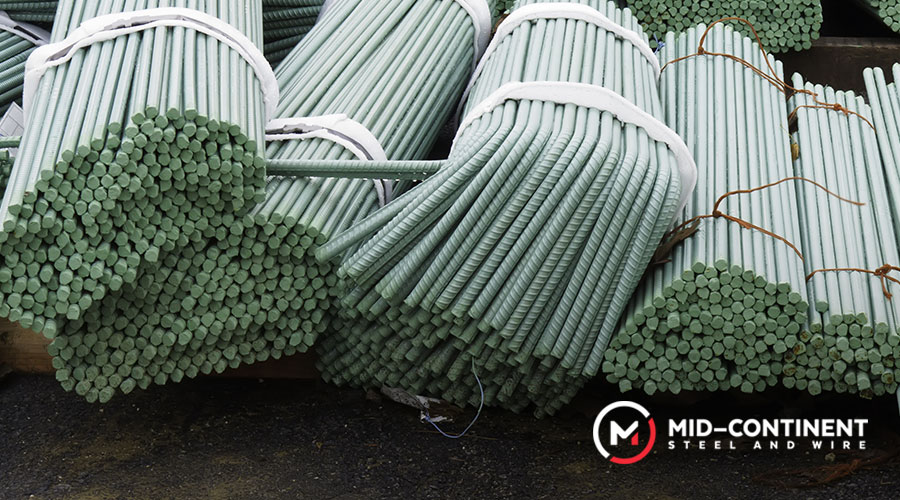
Fiberglass rebar, commonly known as pink rebar, is specifically engineered as a composite material made from glass fibers embedded in a polymer matrix. It features a ribbed surface to improve its grip within the concrete.
These are some of the strengths it brings to construction projects:
- Corrosion resistance: Does not rust or corrode, making it ideal for harsh or moisture-rich environments.
- Lightweight: Much lighter than other materials, which can simplify transport, and installation.
- High tensile strength: Offers strong resistance to tension.
- Non-conductive: Does not conduct electricity or heat, making it suitable for sensitive or specialized applications.
- Low thermal conductivity: Reduces heat transfer within concrete structures.
Comparative table: fiberglass rebar vs steel rebar
| Feature | Fiberglass Rebar | Steel Rebar |
| Material Composition | Glass fiber embedded in polymer matrix | Carbon steel alloy with trace elements |
| Tensile Strength | High strength-to-weight ratio | Excellent strength, ductility, and load-bearing capacity |
| Weight | Significantly lighter (up to 75-80% lighter) | Heavier and sturdier |
| Corrosion Resistance | Excellent; does not corrode or rust | Needs proper coating to prevent corrosion |
| Mechanical Longevity | Maintains tensile strength over time but has a lower modulus of elasticity | Extremely strong and ductile, can deform without breaking |
| Electrical and Thermal Conductivity | Non-conductive, prevents electrical interference and thermal bridging | Conductive, can cause thermal bridging and electrical interference |
| Flexibility and Ductility | Less ductile, brittle, cannot be bent on-site | Highly ductile, can bend without breaking |
Roles and applications
Steel rebar: This type of rebar serves as the traditional reinforcement component in a wide range of concrete construction projects, providing the essential tension that concrete lacks. Due to its high strength and performance, steel rebar is fundamental in stability and integrity.
It is commonly used in applications, such as:
- Heavy load structures and foundations
- High-stress applications
- Industrial facilities and warehouses
- Large-span structures like stadiums
Fiberglass rebar: This material plays a vital role in modern concrete structures by supplying corrosion-resistant tensile strength. While steel rebar is strong but susceptible to corrosion, fiberglass rebar addresses this limitation by providing non-conductive reinforcement that resists chemical exposure and moisture.
Typical uses of fiberglass rebar include:
- Coastal regions with high salt exposure
- Chemical plants and harsh environments
- Foundations and slabs in corrosive conditions
- Underground structures exposed to moisture
The right rebar depends on your project
Understanding the strengths and limitations of different reinforcement materials is key to designing durable, cost-effective structures.
Choosing the right rebar is not about trends, but about:
- Environmental conditions and exposure
- Load-bearing requirements
- Budget
- Local building codes and regulations
Mid-Continent Steel and Wire sets the standard in steel
We deliver products manufactured to industry standards with consistent performance. Our decades of experience in steel manufacturing and supply has built a reputation for quality in reinforcing products used across North America.
In the market for steel rebar? Save on materials, labor, and project time with our rebar solutions: straight, coiled, and spooled, available in different grades and lengths.